DIANDI OTENES
Sharon Pérez
20 de enero – 20 de abril, 2024
Comisaria / Curator: Georgina Santos da Silva
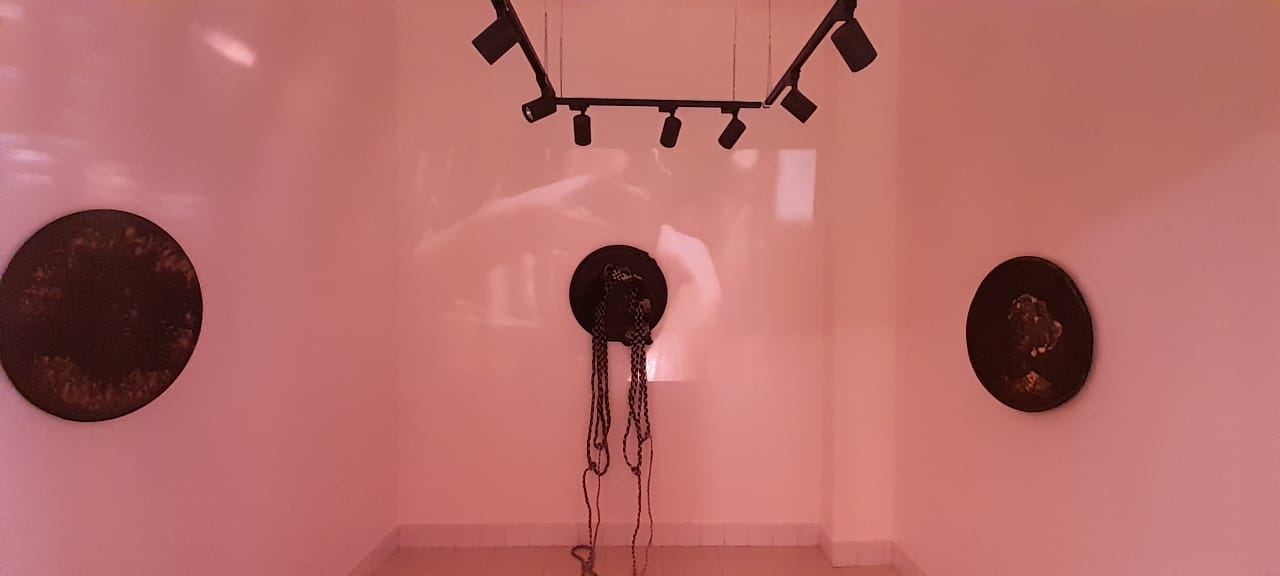
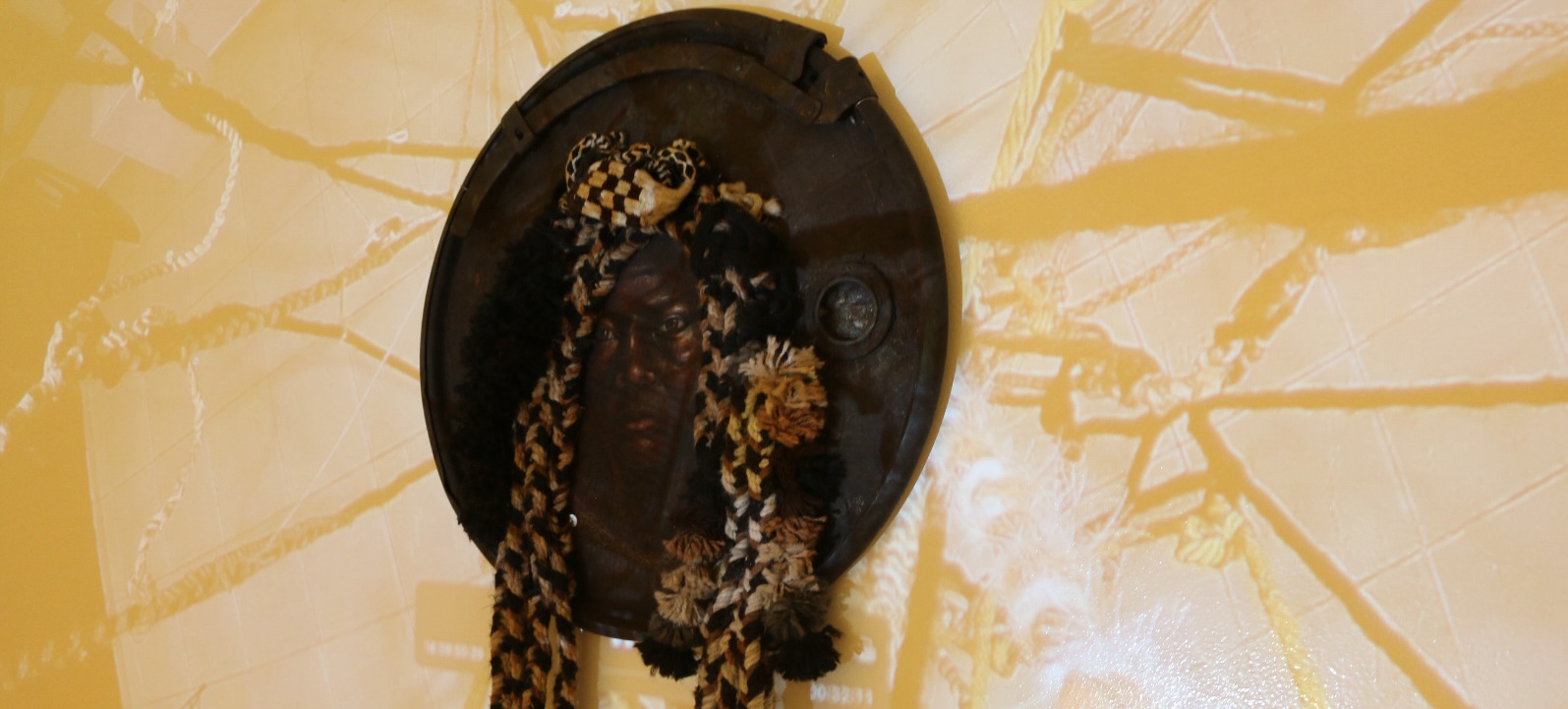
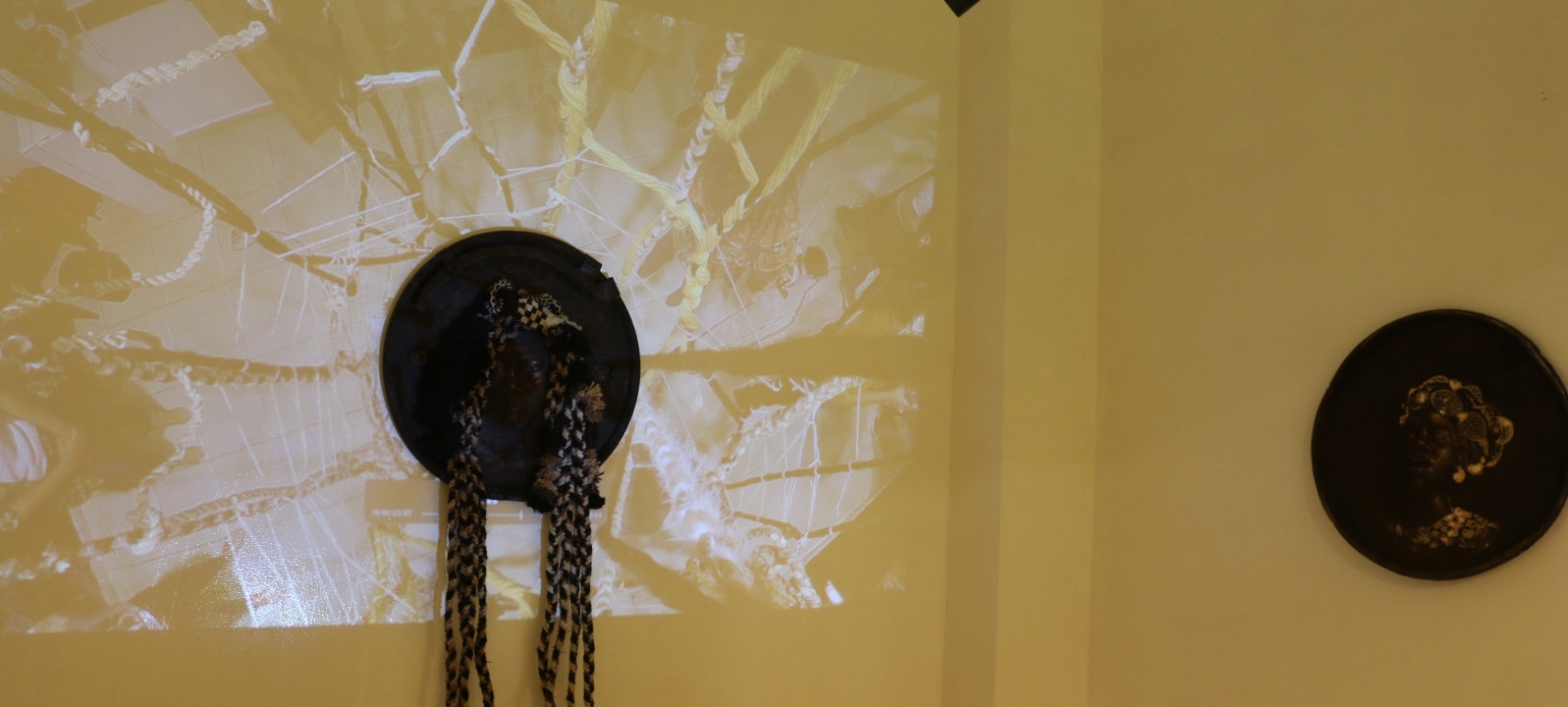
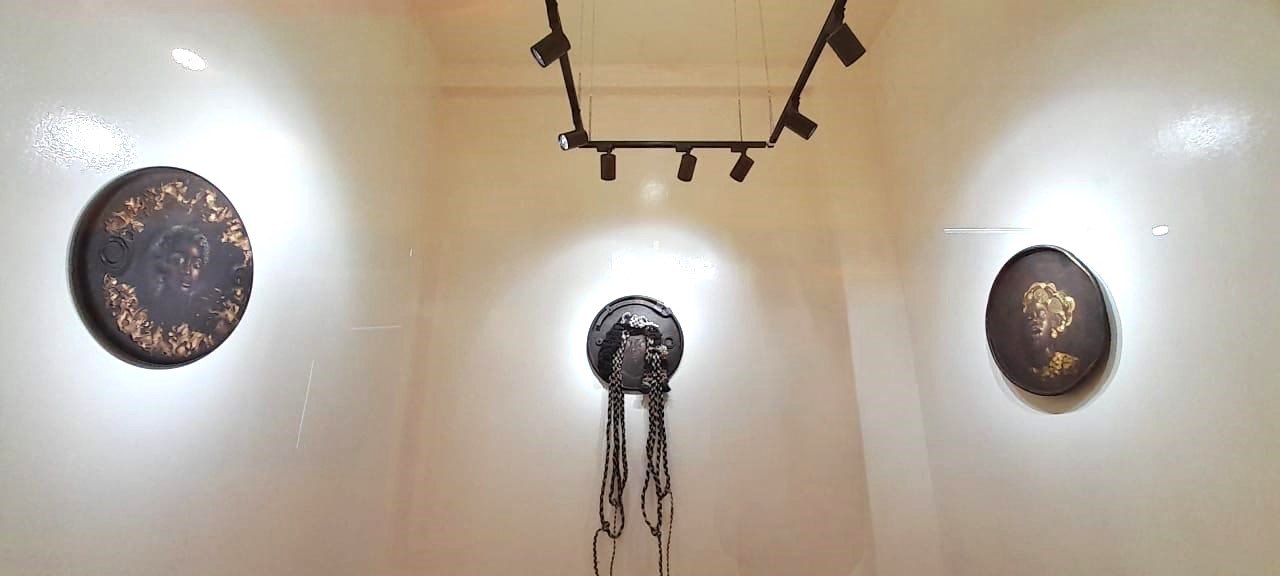
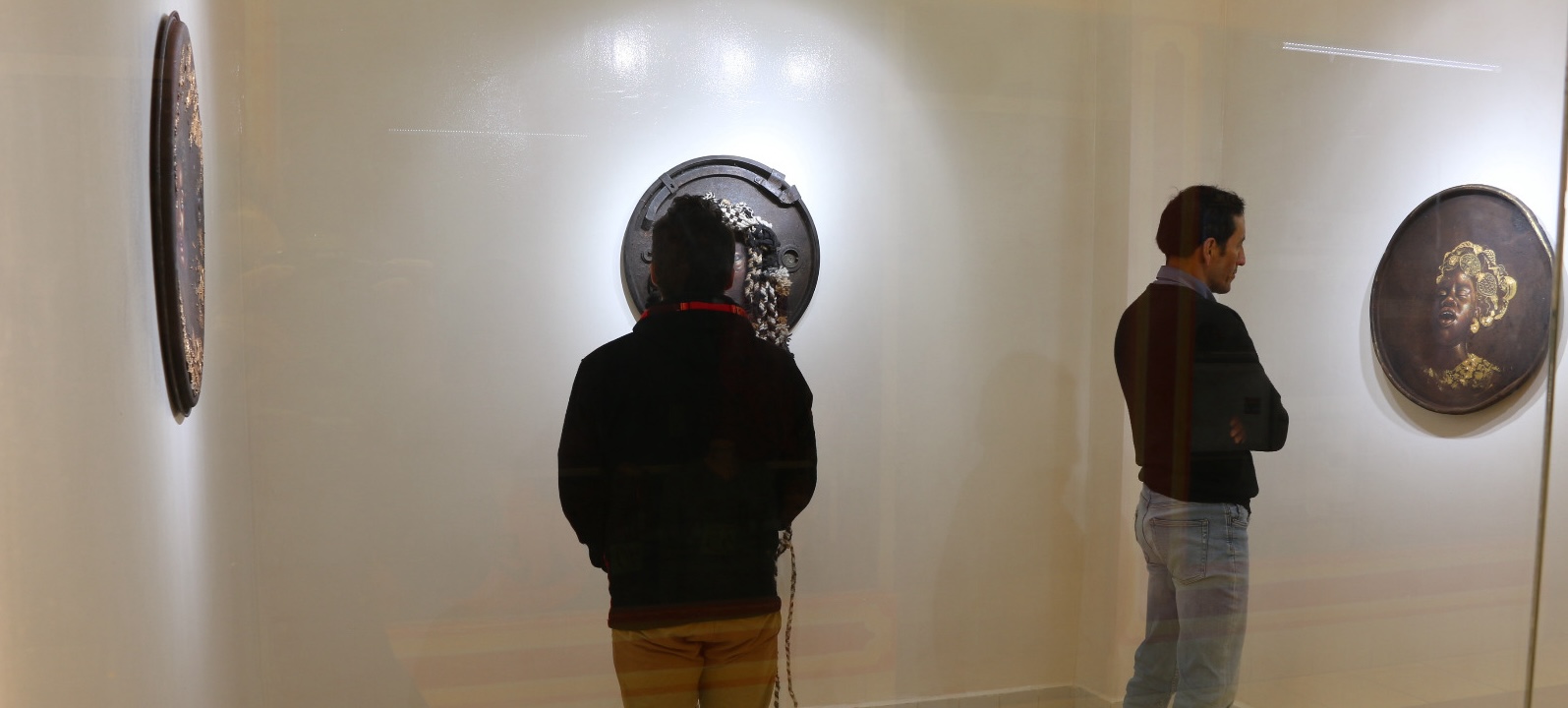
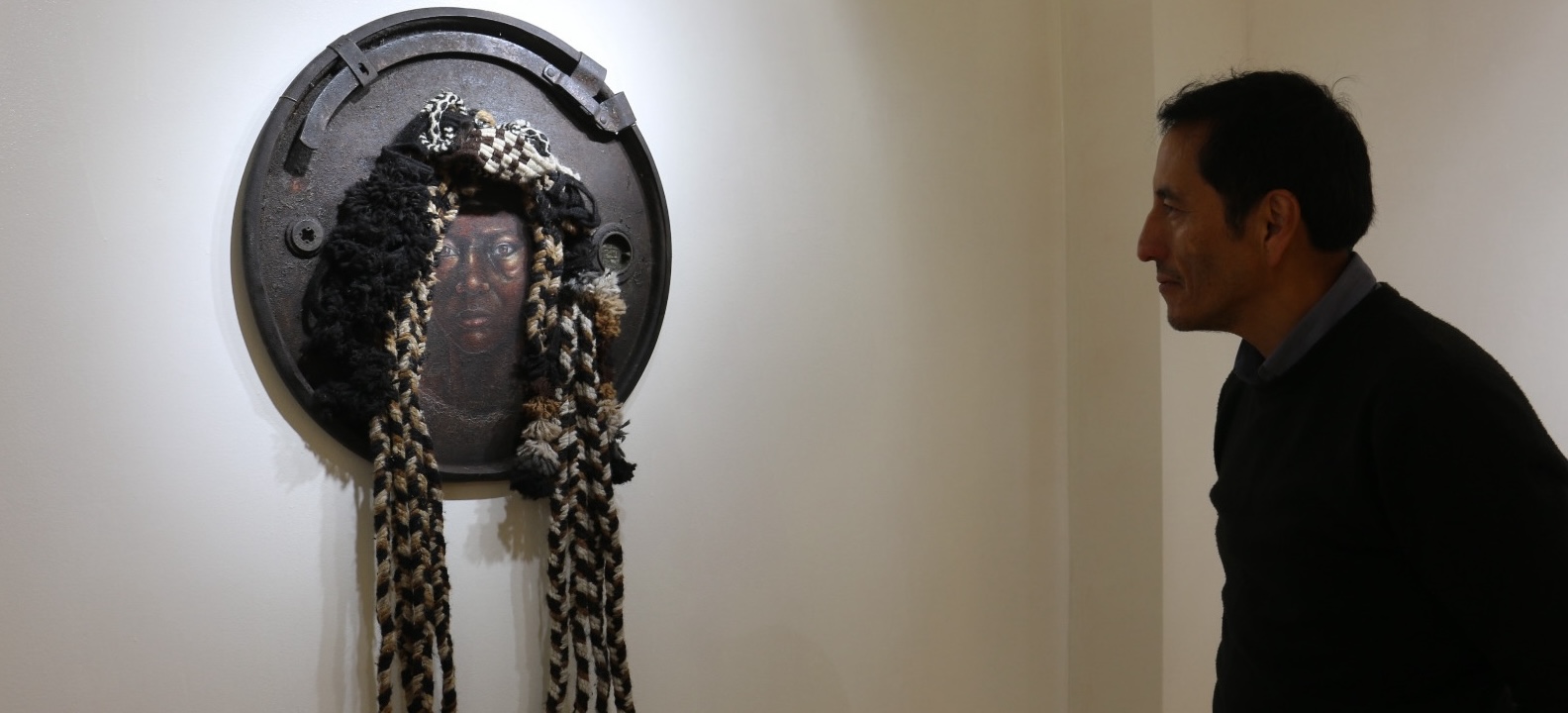
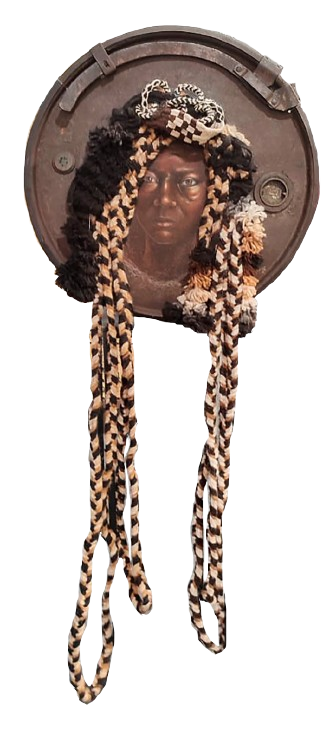
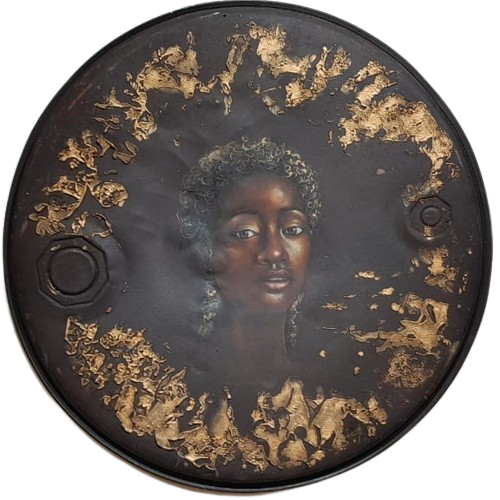
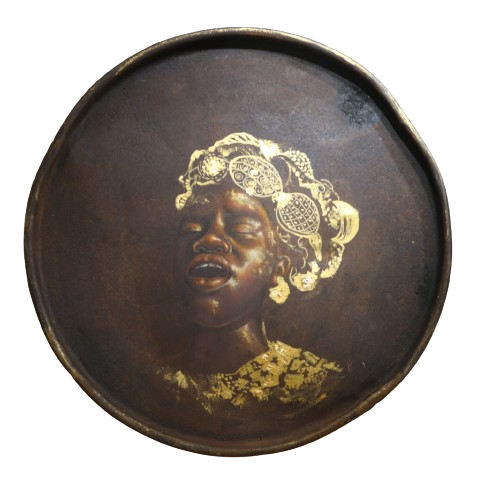
La exposición, denominada en la lengua afro-boliviana como “Diandi Otenes” (¿De dónde eres?), concebida por la mente creativa de Sharon Pérez, plantea una urdimbre de memoria donde presenciamos por medio de una video instalación y obras escultórico-pictóricas, adentrándonos en una escena donde un grupo de mujeres pertenecientes a la comunidad afro-boliviana (matronas de la misma) se encuentran entretejiendo, trenzando cabellos, narrando relatos y discutiendo asuntos inherentes al cabello en sí mismo. En las obras materiales, las trenzas se simbolizan con cuerdas, fusionándose de manera casi esotérica con el audio y las proyecciones que inundan la sala de exhibición.
Entre el entrecruzamiento de las cuerdas y la amalgama de las narrativas de las mujeres comunales, se plasma una trama que se inicia desde el cabello afro como emblema de identidad. El acto de narrar historias en torno al cabello mientras se lleva a cabo el peinado culmina en una suerte de alegoría del tiempo en sí mismo, donde, a semejanza de las sinapsis neuronales, las mujeres tejen un entramado neurológico que no sucumbe y que enfatiza la necesidad de recobrar y preservar la identidad.
¿Diandi otenes? En la lengua afroboliviana significa “¿De dónde eres?” Esta es la pregunta que ronda nuestra mente muchas veces sin respuesta alguna. Termina, en muchos casos, siendo razón de crisis existencial o de fortaleza que incluso puede convertirse en espacio de creación. Encontrar tu origen puede ser una tarea complicada que tal vez no te interese hacer, sin embargo, en algún momento se encuentran los hilos conductores que nos guían a él. Entonces, encontramos el camino a casa. Esto me recuerda a los akan, un pueblo de África que tienen un símbolo llamado Sankofa. Este es un pájaro que mira hacia atrás, lo que nos recuerda que al rememorar y conocer el pasado, podremos comprender nuestro futuro y ser conscientes de nuestro presente.
Estos hilos conductores se entrecruzan, se entrelazan, se anudan y se convierten en trenzas que nuestros antepasados africanos usaron como símbolo de resistencia, donde guardaron mapas y semillas para huir de la situación de esclavitud. Las trenzas son entonces ese símbolo de resistencia generacional de la cultura afrodescendiente, que está en constante evolución y nos recuerda nuestra relación y conexión del cuerpo con la tierra, con el agua, con la vida y con la muerte.
¿Diandi otenes? Es una exhibición que conecta la pregunta al legado cultural y de resistencia de las trenzas como elemento muy importante al momento de hablar de la cultura e identidad afrodescendiente, donde las trenzas se convierten en esos lazos que generan conexiones, al igual que la sinapsis que ocurre en el cerebro al activarse la memoria. Se generan nudos, reacciones que ahora invitan a ser parte de este tejido y entramado para encontrar quiénes somos. No es solo desde la identidad afroboliviana, sino para todo aquel que, a partir de sus experiencias, quiera trenzar y construir la obra.
The exhibition, named in the Afro-Bolivian language as “Diandi Otenes” (Where are you from?), conceived by the creative mind of Sharon Pérez, presents a tapestry of memory where we witness through a video installation and sculptural-pictorial works, delving into a scene where a group of women belonging to the Afro-Bolivian community (matriarchs of the same) are interweaving, braiding hair, narrating stories, and discussing issues inherent to hair itself. In the material works, braids are symbolized with ropes, merging almost esoterically with the audio and projections that flood the exhibition hall.
Between the intertwining of the ropes and the amalgamation of the narratives of the communal women, a plot is portrayed that begins with afro hair as an emblem of identity. The act of narrating stories about hair while styling culminates in a sort of allegory of time itself, where, akin to neuronal synapses, women weave a neurological network that does not succumb and emphasizes the need to recover and preserve identity.
“¿Diandi otenes?” in Afro-Bolivian language means “Where are you from?” This is the question that often revolves in our minds without any answer. It ends up, in many cases, being a reason for existential crisis or strength that can even become a space for creation. Finding your origin can be a complicated task that perhaps you’re not interested in doing, however, at some point, you find the guiding threads that lead us to it. Then, we find the way home. This reminds me of the Akan, a people of Africa who have a symbol called Sankofa. This is a bird that looks backward, which reminds us that by recalling and knowing the past, we can understand our future and be aware of our present.
These guiding threads intertwine, intertwine, knot, and become braids that our African ancestors used as a symbol of resistance, where they kept maps and seeds to escape from slavery. Braids are then this symbol of generational resistance of Afro-descendant culture, which is constantly evolving and reminds us of our relationship and connection of the body with the earth, with water, with life, and with death.
“¿Diandi otenes?” is an exhibition that connects the question to the cultural and resistance legacy of braids as a very important element when talking about Afro-descendant culture and identity, where braids become those ties that generate connections, just like the synapses that occur in the brain when memory is activated. Knots, reactions are generated that now invite to be part of this weaving and weaving to find out who we are. It is not only from the Afro-Bolivian identity but for anyone who, based on their experiences, wants to braid and build the work.
Exhibition Views
Works
Artist
Sharon Pérez
Curator
Georgina Santos da Silva
El Alto, Bolivia
Lope de la Vega 3083
info@fratermeuscontemporary.com